

How to Build Multiple Income Streams (A Realistic Path to Financial Stability)

In a fast-changing world where job security is no longer guaranteed, relying on just one source of income can put you at serious financial risk. Many people today are beginning to realize that true financial stability doesn’t come from working harder at a single job.
Building multiple income streams is not about becoming rich overnight. It’s about creating a system where money flows into your life from different directions, some active, some passive, and some scalable over time.
The beauty of this approach is simple:…Even if one income stream slows down or stops, others continue to support you.
In this guide, you’ll learn a realistic, step-by-step roadmap to building multiple income streams; including beginner-friendly platforms, proven strategies, and practical actions you can take immediately.
Step 1: Build a Strong Financial Foundation
Before you start chasing multiple income streams, you need stability. Think of this step as laying the groundwork for everything that follows.

Without a stable base, trying to juggle multiple income ideas can lead to burnout, confusion, and inconsistency. Your primary income is what gives you the breathing room to explore new opportunities.
At this stage, your focus should be:
- Covering your essential expenses
- Saving at least a small emergency fund
- Reducing unnecessary debt
💡 This step is not about expansion, but it’s about control and stability.
Once your foundation is secure, you’ll be in a much stronger position to take calculated risks.
Step 2: Start With Simple Side Income Platforms
Now that you have a foundation, it’s time to introduce your first additional income stream.
This step is critical because it shifts your mindset — you move from relying on one source of income to realizing you can earn from multiple places.
Instead of building something complex, start with platforms that already have built-in traffic and demand.
🔹 Platforms You Can Use
- Fiverr
A global freelance platform where you can offer services starting at $5 and scale up. Beginners can sell skills like logo design, writing, video editing, voiceovers, or even simple tasks like data entry. - Upwork
A more professional freelancing platform where clients post jobs and freelancers submit proposals. It’s ideal for higher-paying gigs and long-term projects. - TaskRabbit
If you’re in the US, this will definitely work for you. This platform connects people with local tasks such as moving, cleaning, assembling furniture, or running errands. It’s great if you prefer offline or physical work. - DoorDash
A delivery app that allows you to earn by delivering food. It’s flexible and beginner-friendly, especially if you need quick cash flow.
💡 Key Strategy:
Pick ONE platform, master it, and generate consistent income before adding another.

Step 3: Build Digital Income Streams
Once you’ve experienced earning outside your main job, the next step is to build something that can scale beyond your time.
Digital income streams are powerful because:
- You can sell to a global audience
- You don’t need physical inventory
- You can earn repeatedly from one effort
🔹 Platforms & How They Work
- Gumroad
A simple platform where creators sell digital products like eBooks, courses, templates, and guides. You upload once and get paid every time someone buys. - Payhip
Similar to Gumroad but with added features like memberships, subscriptions, and affiliate programs.
🔹 Affiliate Marketing Platforms
- Impact
A professional affiliate network that connects you with major brands. You earn commissions by promoting products or services. - Amazon Associates
One of the easiest ways to start affiliate marketing. You promote products from Amazon and earn a percentage of each sale.

🔹 Content Creation Platforms
- YouTube
A video platform where creators earn through ads, sponsorships, and product promotions. - TikTok
A fast-growing platform ideal for short, viral content that can drive traffic to your offers.
💡 Reality Check:
This step takes time, but it has the highest long-term payoff.

Step 4: Build Semi-Passive Income Systems
Now you’re moving from earning money to building systems that earn money.
Semi-passive income requires effort upfront, but once it’s set up, it continues to generate income with less daily involvement.
🔹 Platforms Explained
- Printful
A print-on-demand service that prints and ships products like T-shirts, mugs, and hoodies after a customer places an order. - Teespring
A platform that allows creators to design and sell merchandise without holding inventory.
💡 You focus on design and marketing — they handle production and shipping.
🔹 Blogging & Monetization
- Google AdSense
A platform that allows you to earn money by displaying ads on your website.
Blogging allows you to:
- Share valuable content
- Rank on Google
- Earn from ads, affiliates, and sponsored posts
💡 This is where your NewsFlex360 idea becomes powerful.
Step 5: Invest to Create Passive Income
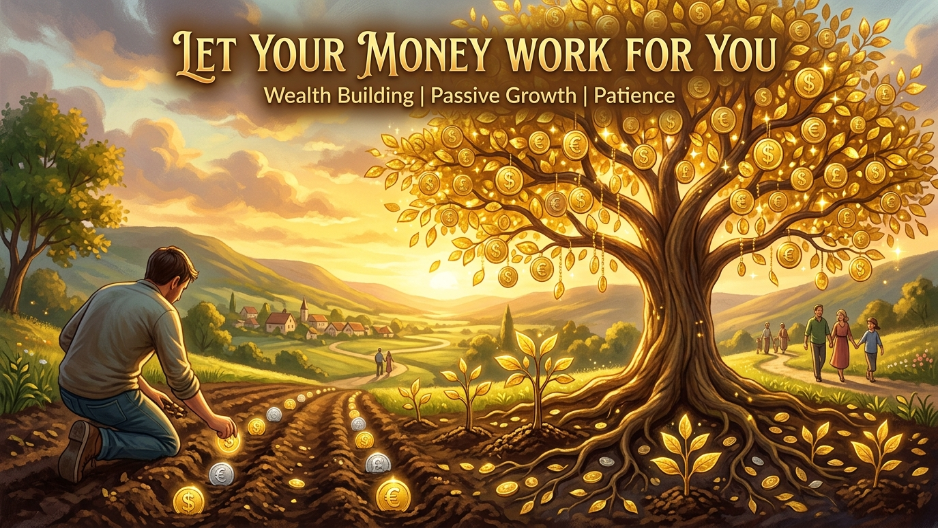
At this stage, you’re no longer just earning — you’re building wealth.
Investing allows your money to grow without direct effort.
🔹 Investment Platforms
- Robinhood
A popular app that allows users to trade stocks with zero commission (mainly used in the U.S.). - Wealthsimple
A beginner-friendly Canadian platform for investing in stocks and ETFs with low fees.
🔹 What You Can Invest In
- Stocks (ownership in companies)
- ETFs (diversified investment funds)
- Dividend stocks (pay you regularly)
💡 This is the closest thing to true passive income.
Step 6: Build a Balanced Income System
The final step is about combining everything you’ve built into a balanced financial ecosystem.

By now, you should have:
- Active income (job or freelancing)
- Semi-passive income (content, blogging, POD)
- Passive income (investments)
This balance ensures:
- Stability
- Growth
- Long-term financial security